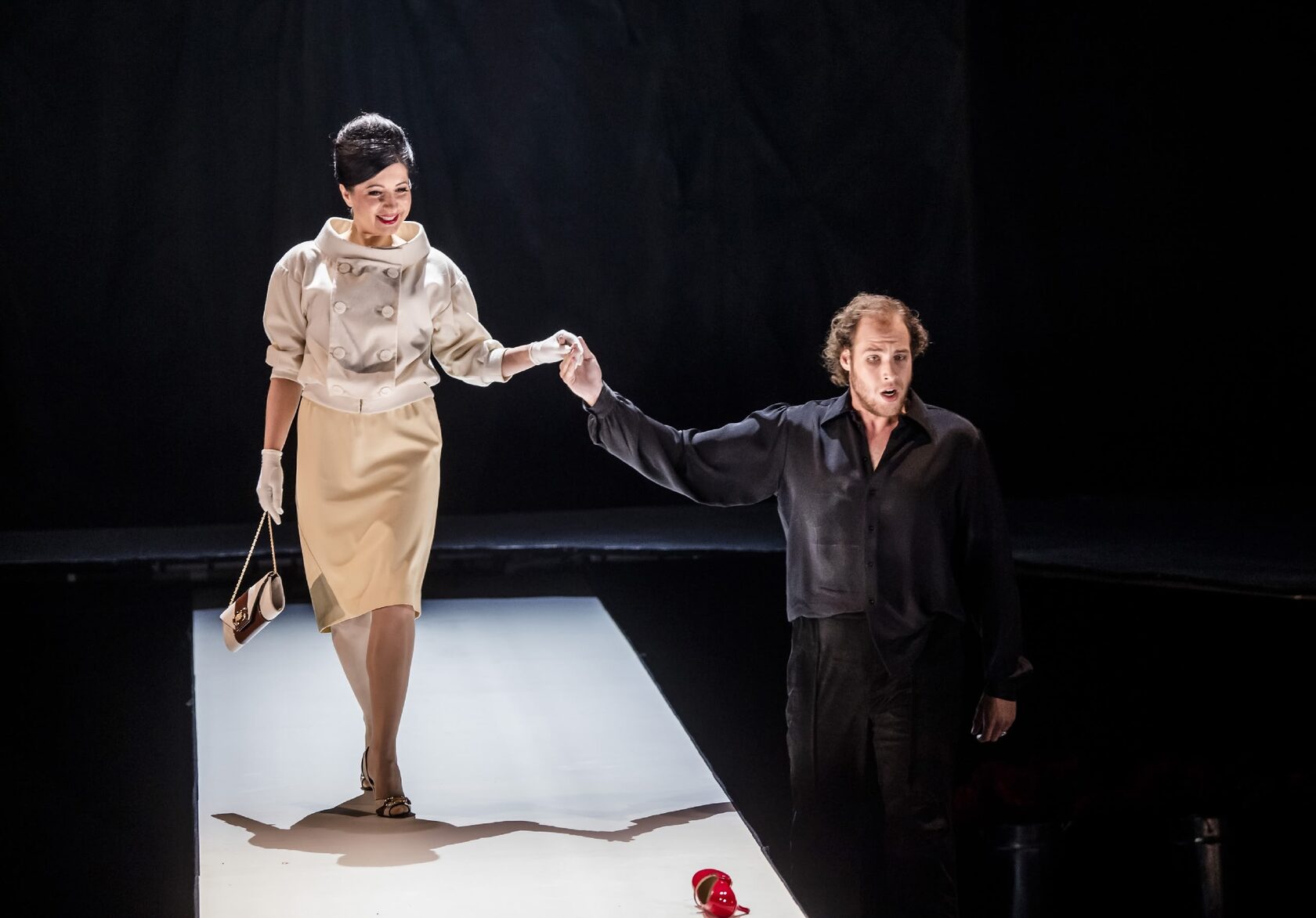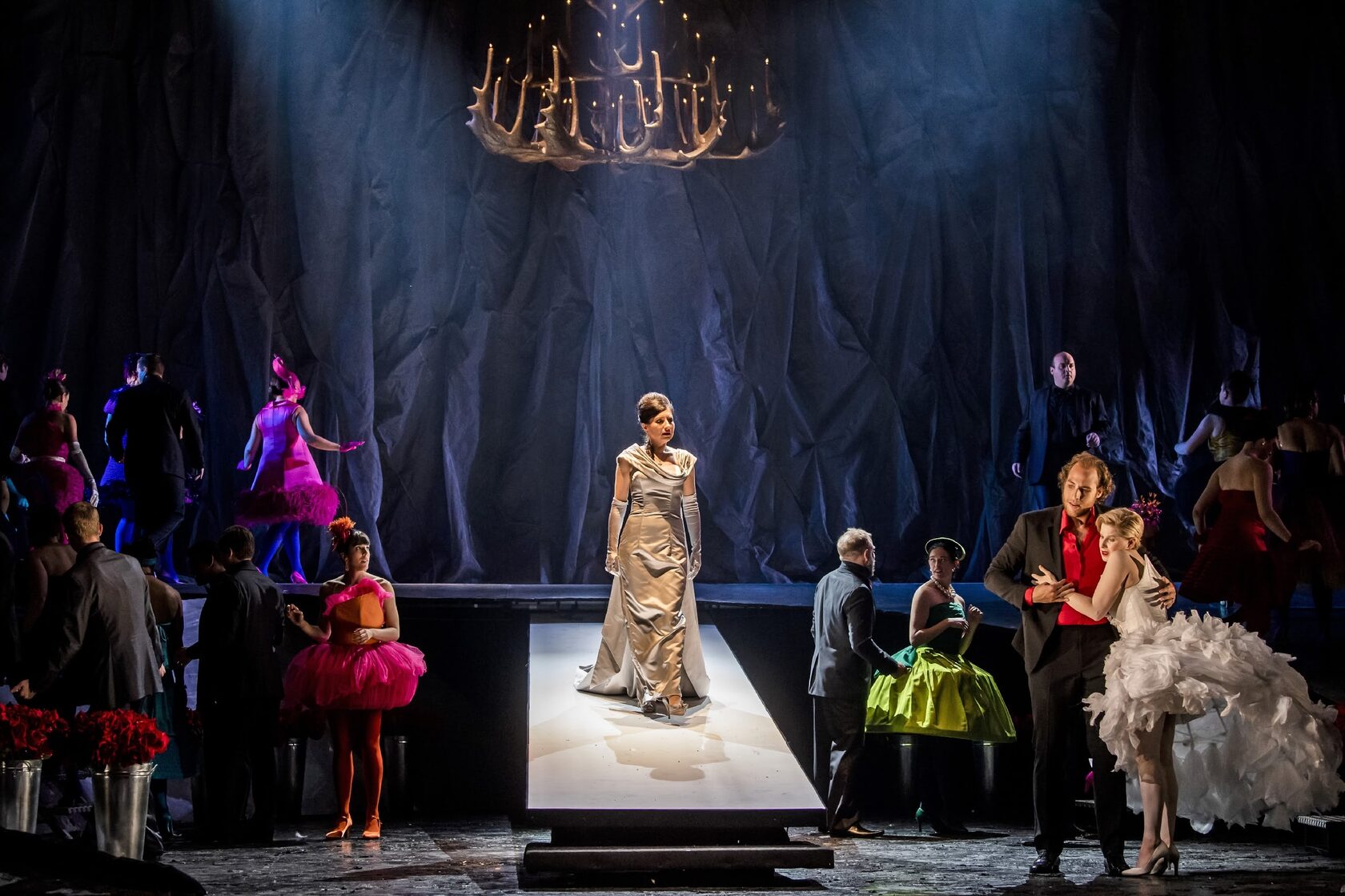
Opera singer Zoya Tsererina (ZT) has, in just four years, built a rapid European career, transforming her voice from mezzo-soprano to soprano and establishing herself in one of the most demanding dramatic soprano roles in the repertoire — Puccini’s Princess Turandot. She was guided through this vocal transition by her teacher Alexander Tikhonchuk, based in Paris and also her husband. After successful debuts in Bonn and Valencia, Tsererina was immediately invited to perform the role of the Foreign Princess in Dvořák’s Rusalka in a revival at the Glyndebourne Festival in Melly Still’s production. More recently, she made a triumphant debut at the Warsaw National Opera in the title role of Tosca under the baton of Patrick Fournillier. The singer spoke with Vladimir Dudin (VD) about her fairy-tale experience in Glyndebourne, her approach to Wagner, and her philosophy of opera.
VD: Today, Russian singers can be found at almost all major opera festivals. Still, an invitation to Glyndebourne is a special recognition of vocal achievement. How did you end up there?
ZT: It was completely unexpected for me to receive an invitation to sing at Glyndebourne. I was offered the role of the Foreign Princess in Rusalka without an audition. The casting department learned about me from a video recording of Turandot at the Kazan Opera — in fact, my debut in that role. However, the Princess is not as simple as it may seem; it is an intense, concentrated part that requires great strength, skill, and a large, resonant voice. It is actually closer to a mezzo role, with a dense middle register and very rich orchestration. That is when I understood why I had been chosen.
VD: Did you manage to feel the atmosphere of the festival?
ZT: It felt as if I had entered a magical world where everyone is happy: smiling, laughing, and in a positive mood. You leave rehearsal still hearing: “You sounded wonderful! Magical!” At Glyndebourne this is normal — people constantly encourage each other with “Bravo!”, maintaining a sense of celebration. Everyone — colleagues, drivers, cleaners, costume staff, makeup artists — is smiling and friendly. It was deeply inspiring. Even before performances, representatives of the management would come into the dressing room to wish us luck, and afterwards to congratulate us. They made us feel truly important, part of a unified festival team.
VD: Did conductor Robin Ticciati also follow this spirit of generous praise?
ZT: Robin left the impression of a very positive musician who creates real magic on stage. Singing under his direction was a great artistic pleasure. He immediately liked my voice and often exclaimed “beautiful sound!” after rehearsals. Of course, he gave notes on phrasing and rhythm, but always in a very delicate manner. If something needed correction, he would quietly come over and whisper it.
VD: How did you work on the Czech language in Rusalka?
ZT: There were several coaches — around five — for language, music, and dramaturgy. We worked with each of them individually. I prepared the role with Irène Kudela from the Opéra Bastille in Paris, one of the best Rusalka specialists. Czech is quite unusual, but at a deeper level it felt familiar because it is a Slavic language. Czech audience members at the premiere said everything sounded very natural.
VD: How did the director approach the role of the Princess?
ZT: In this version, the Foreign Princess is not a villain. She loves the Prince and tries to win him over. The director told me: “From the very first note, you must make him fall in love with you.” She wanted a human, not fairy-tale reading — closer to modern audiences. “You must be like oxygen for the Prince,” she said. We were constantly asked to find subtext and psychological motivation.
Working on the production felt almost like filming a movie, especially since it was recorded for DVD. The director demanded very precise emotional work. At times it was surprising, even extreme, but on opening night everything suddenly came together.
VD: Modern opera seems to demand more acting from singers, as Elīna Garanča has noted.
ZT: That is true, but we still lack proper vocal school in acting. In my conservatory years, acting was taught in a traditional operatic style. I admire singers like Renata Tebaldi — her drama is in the voice itself. Today, acting sometimes dominates too much, and voices can suffer. Finding balance is very difficult.
VD: What happened after Rusalka?
ZT: I received offers for Abigaille, Minnie in La Fanciulla del West, and Wagner roles such as Sieglinde. But I am not yet ready for Wagner — I am still exploring whether I feel close to that world.
VD: What, in your view, is the philosophical essence of opera?
ZT: Opera brings us something profoundly beautiful and mysterious. Its stories always touch the deepest themes — soul, God, love, death. On stage, we as performers deal with these universal questions through our characters. It is a deep psychological journey. That is what fascinates me.